
How it works
PSC Pipeline monitors the places public sector construction projects first appear, researches each qualifying scheme into a structured record, and delivers it to your team through an online portal. Records are kept current as the scheme moves towards procurement.
01 · Where schemes come from
A public sector construction project exists on paper long before it reaches a planning portal or a tender notice. It appears first in a capital programme, a council cabinet paper, an NHS trust board paper, a funding award or a public consultation.
PSC checks those sources systematically across England and Wales, for councils, combined authorities, NHS trusts, schools and academy trusts, universities and colleges, housing associations, and police and fire services. Early procurement notices are used where they reveal a consultant appointment, as a prompt to research the scheme behind it.
That is why most schemes reach PSC Pipeline at RIBA Stage 0 to 2.
02 · The RIBA stages
0
Strategic definition
1
Preparation and briefing
2
Concept design
3
Spatial coordination
4
Technical design
5
Manufacturing and construction
6
Handover
7
Use
PSC Pipeline finds it here
0
Strategic definition
PSC finds it
1
Preparation and briefing
PSC finds it
2
Concept design
PSC finds it
3
Spatial coordination
4
Technical design
5
Manufacturing and construction
6
Handover
7
Use
03 · What we research
Each qualifying scheme is researched and written up to one standard, so every record answers the same questions in the same place:
Key information
The client, a description of the scheme, sector, project type and the RIBA stage it was found at.
Associated companies
Consultants and contractors already appointed, and their role.
Financial
The budget, how it is funded and where approval stands.
Procurement
The likely route and what is expected to be bought, and when.
Programme
The key dates and decisions so far, and those still to come.
Planning
Planning status and any application history.
Risk
What could change the scheme, and how likely it is.
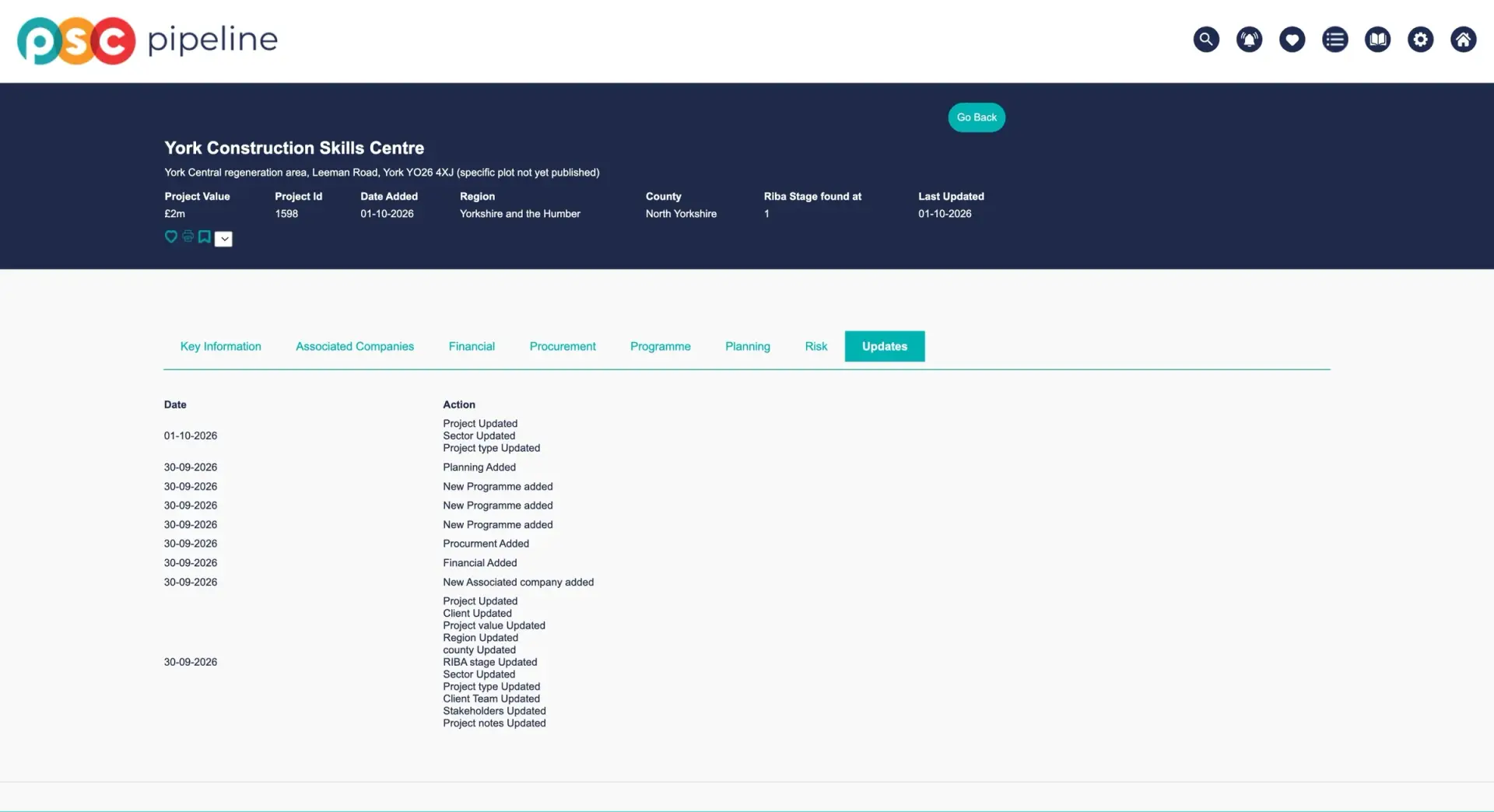
Updates
A dated log of every change to the record.
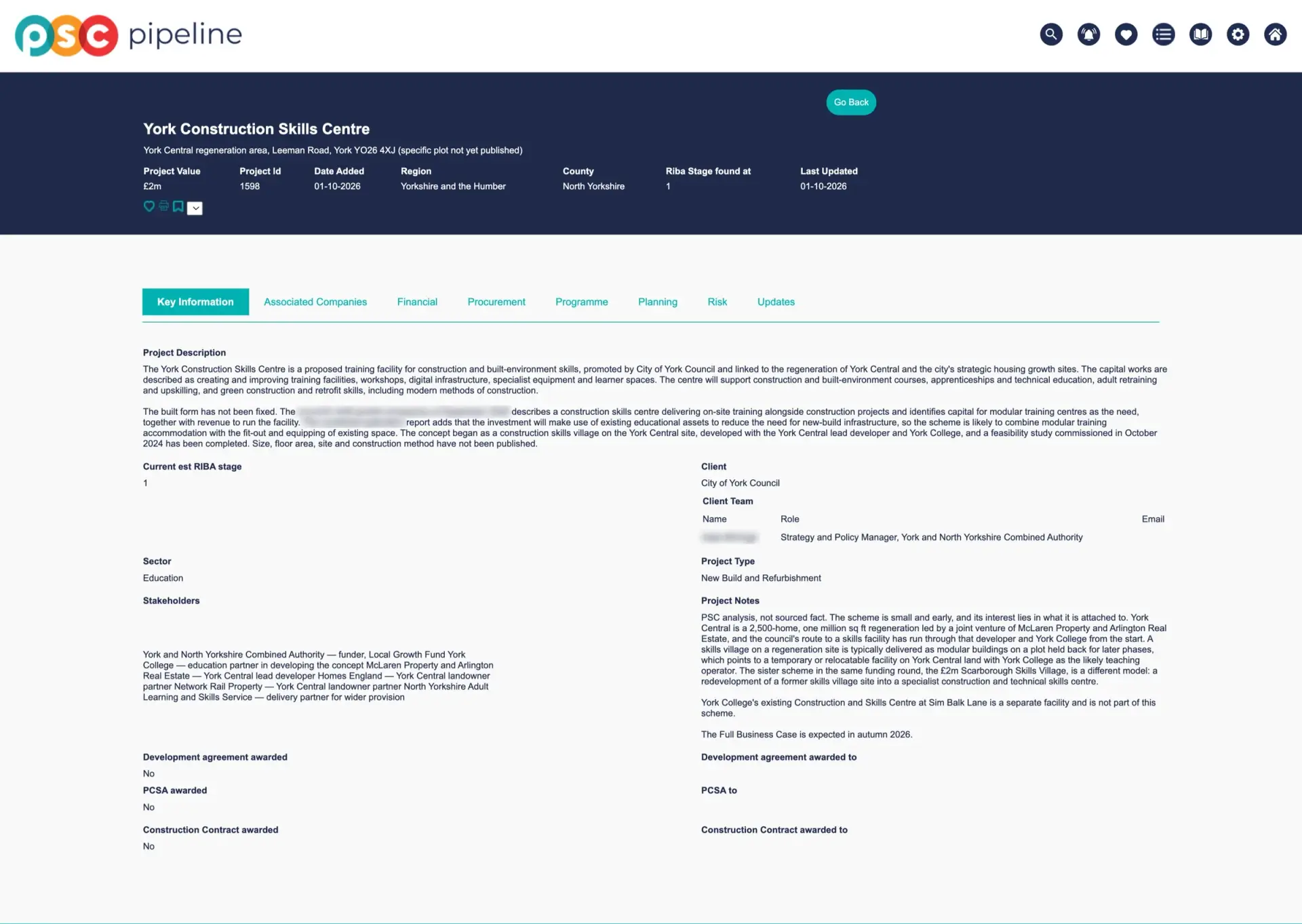

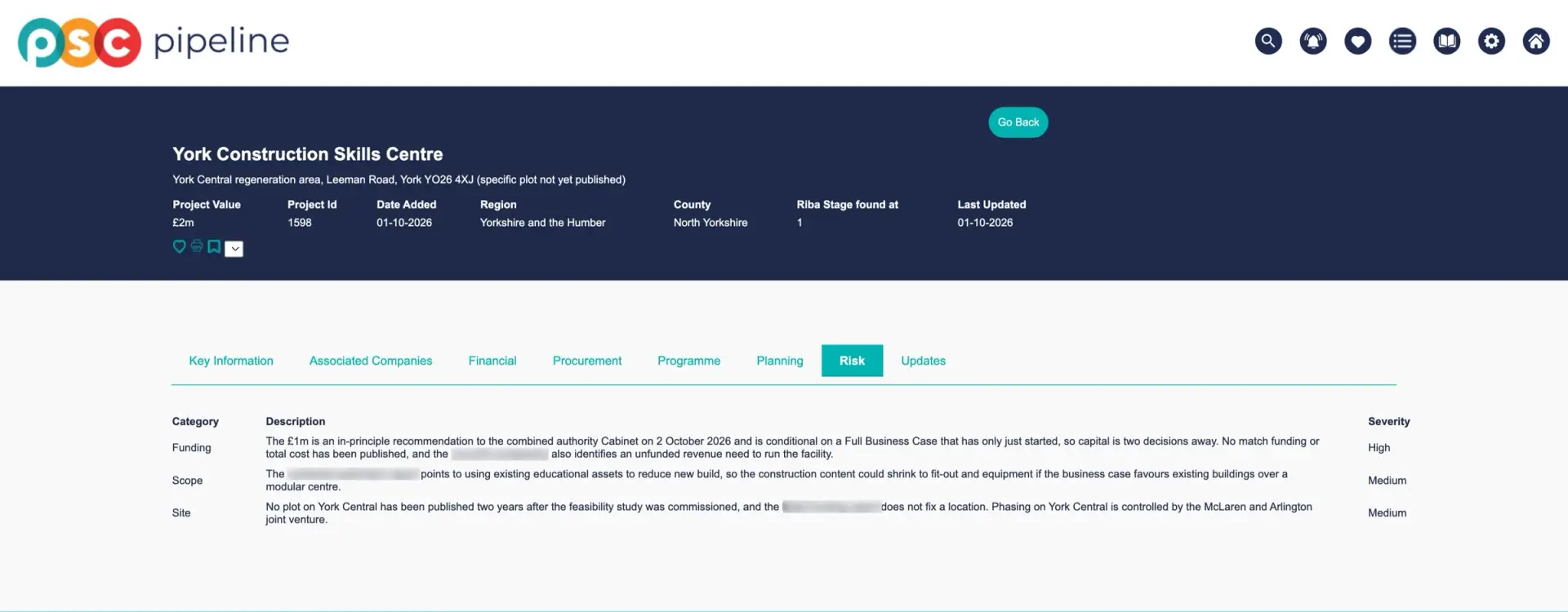
A PSC Pipeline record, found at RIBA Stage 1. Some details blurred.
At RIBA Stage 0 to 2, how much is known varies from scheme to scheme. A budget may be an allocation rather than a cost plan, and a site may not be fixed. That is the trade-off of being early. Each record says plainly what is known and what is not, and an incomplete picture in time to act beats a complete one once the opportunity has gone.
04 · How it reaches your team
Every subscription includes unlimited users, so everyone in your business development, bid and regional teams works from the same pipeline.
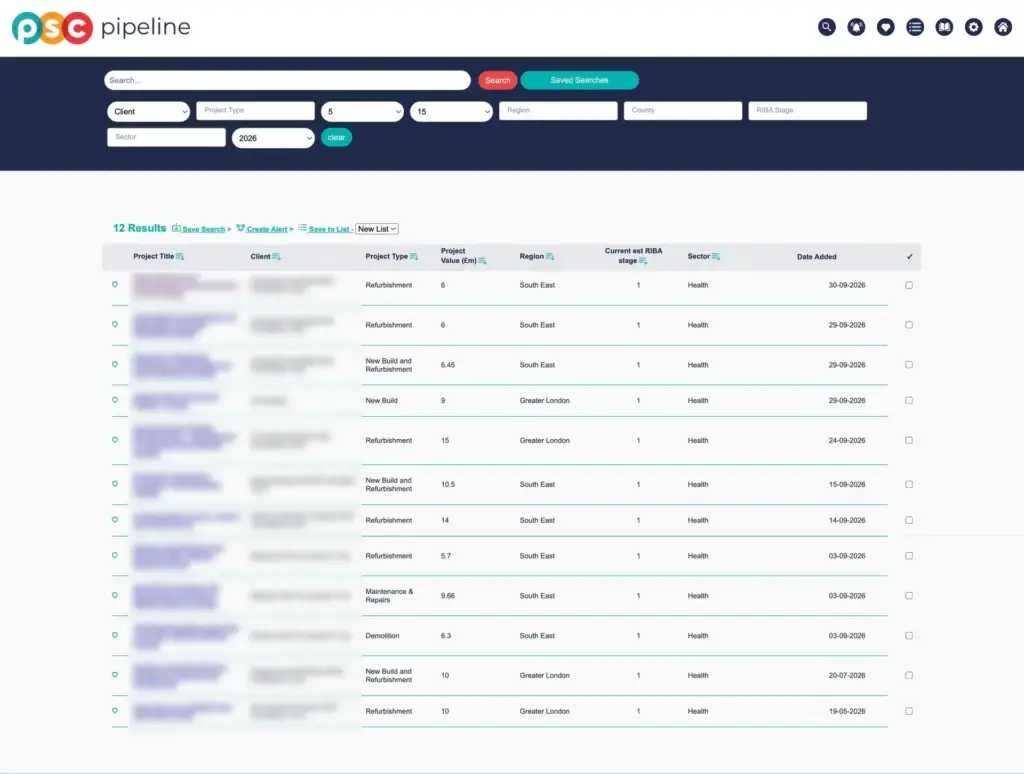
Search and filter by region, county, sector, project type, client, value, RIBA stage and year, or by keyword.
Save a search and get an email when a new scheme matches it.
Build lists to shortlist schemes for a bid review or a regional meeting.
Watch a scheme and get an email when its record is updated.

05 · How records stay current
Every record is reviewed on a four-month cycle. Between reviews, records are updated whenever a new signal appears: a funding decision, a consultant appointment, a planning application or a procurement notice.
Each change is logged on the record's Updates tab with its date, and anyone watching the scheme gets an email.
06 · Getting started
New subscribers get logins for the whole team and bespoke onboarding sessions, built around your regions and how your team wins work, so the pipeline is part of your BD routine from the first week. Short tutorials sit inside the portal for anyone who joins later.
07 · Research included
Every PSC Pipeline subscription includes PSC Research Tool licences. When a client, a supplier or a colleague brings you a scheme, give the Research Tool a project name or a few details and it returns a structured report on the client, scope, budget, programme, procurement and team, researched across the open web.
Explore the Research Tool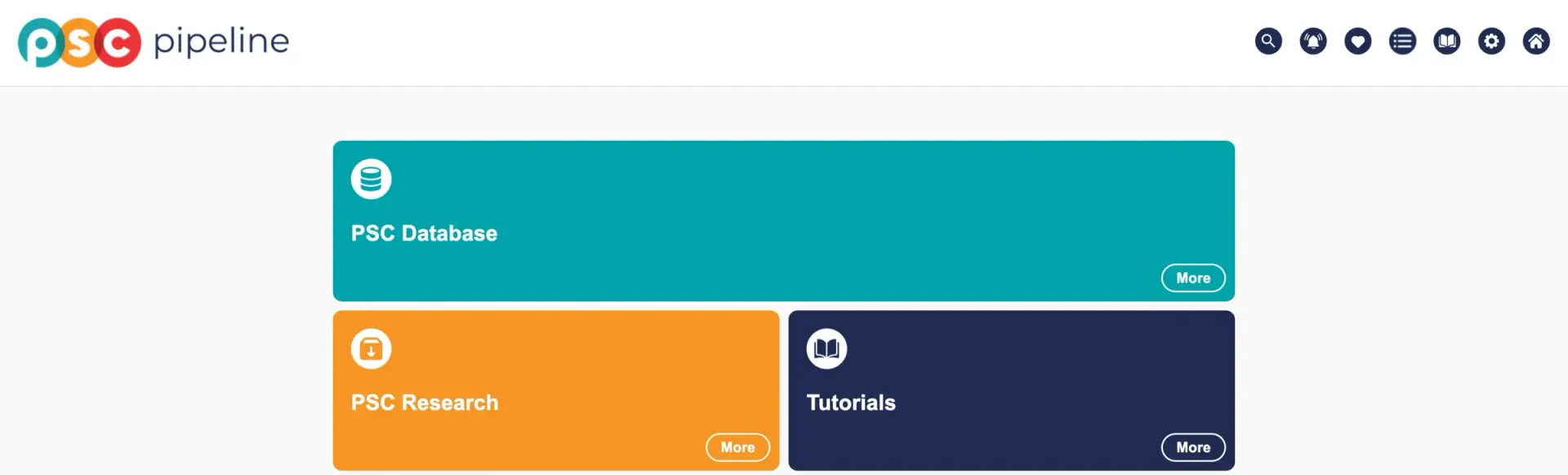
Where does PSC Pipeline's information come from?
Published public sector sources: capital programmes, council cabinet papers, NHS board papers, funding announcements, public consultations and early procurement notices, checked systematically across England and Wales.
How early does PSC Pipeline find schemes?
At RIBA Stage 0 to 2, often months or years before a planning application or tender notice.
How often are records updated?
Every record is reviewed on a four-month cycle and updated in between whenever something changes. Each change is logged on the record with its date.
How many people can use a subscription?
As many as you like. Every subscription includes unlimited users.
Will I know when a new scheme appears?
Yes. Save a search and PSC Pipeline emails you when a new scheme matches it. Watch a scheme and you get an email when its record changes.
How is PSC Pipeline priced?
An annual subscription per organisation, priced by the regions you cover. See Pricing.

Five minutes on what a typical PSC Pipeline record shows, and what your team can do with it.
